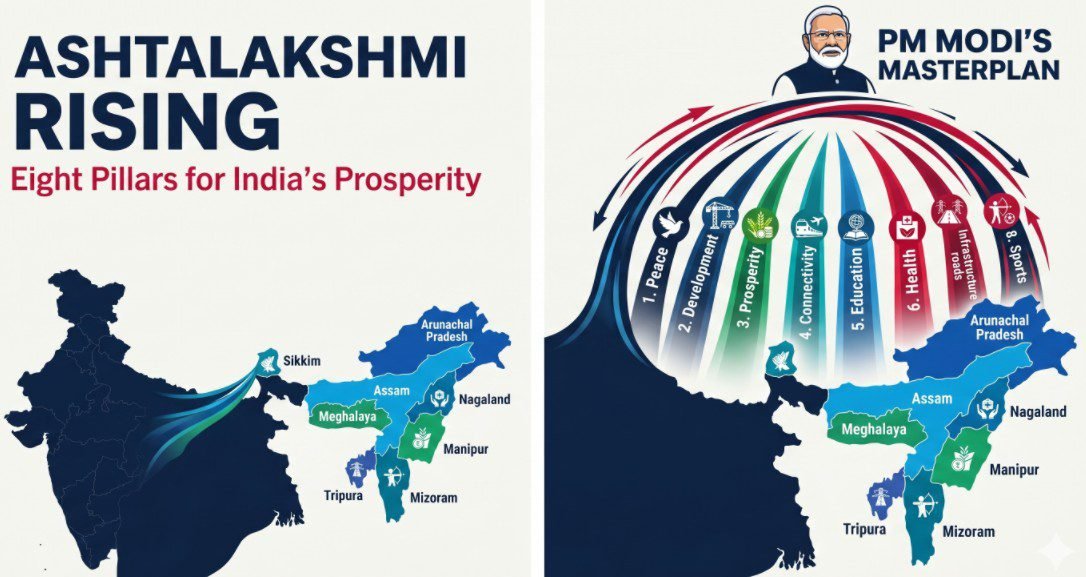
Prime Minister Narendra Modi arrived in Gangtok today, April 28, 2026, to celebrate a historic milestone. Specifically, he marked the 50th anniversary of Sikkim’s statehood with a grand visionary address. Consequently, he officially unveiled the Ashtalakshmi Vision for the entire Northeast region. This masterplan views the eight states as the eight forms of wealth for India’s future prosperity. Therefore, the government is immediately investing ₹4,000 crore into transformative local projects. Notably, these initiatives focus heavily on physical and digital connectivity in the Himalayan terrain. Furthermore, the plan aims to integrate the Northeast with the national and global mainstream markets. Thus, tech professionals and early adopters see this as a massive growth opportunity.
The most critical aspect of this announcement involves the new connectivity grid for Gangtok. Specifically, the Prime Minister inaugurated high-tech steel arch bridges over the River Teesta. These structures will finally provide all-weather access between Gangtok and Namchi. Additionally, the Sevoke-Rangpo railway line has reached its final testing phase. This rail link will connect Sikkim to the national broad-gauge network for the first time in history. Consequently, logistics costs in the region will drop by nearly 40%. Furthermore, the “Digital Northeast” initiative will provide 5G connectivity to the remotest villages by the end of the year. Therefore, the Ashtalakshmi Vision represents a fundamental shift from regional isolation to global integration. It positions the Northeast as the gateway to Southeast Asia under the Act East Policy.
Core Philosophy of the Ashtalakshmi Vision
The Ashtalakshmi Vision treats the eight states of the Northeast as the eight pillars of India’s development. Specifically, the Prime Minister emphasized that these states are no longer “peripheral” territories. Instead, they are the driving force of the new Indian economy. Consequently, the government has moved away from “look east” to a proactive “act east” strategy. Therefore, every policy now focuses on the unique potential of each Himalayan state.
Peace and Stability as Foundations
Peace remains the primary requirement for any sustainable growth. Specifically, the government has signed multiple peace accords with local groups over the last decade. Consequently, insurgency has reached an all-time low in 2026. Therefore, investors now feel secure in committing capital to the region. Notably, this stability allows for the rapid construction of high-altitude infrastructure.
Harnessing the Power Potential
The Northeast holds the key to India’s green energy future. Specifically, the region possesses nearly 40% of the country’s total hydropower potential. Consequently, the masterplan includes several run-of-the-river projects that protect the local ecosystem. Therefore, the region will soon export surplus green energy to neighboring countries. Furthermore, this power will fuel the new industrial hubs in the plains.
Tourism as a Global Magnet
Tourism is the most visible form of wealth in the Ashtalakshmi Vision. Specifically, the Prime Minister launched a “Sustainable Tourism” circuit for the Himalayan belt today. Consequently, Gangtok will become a primary hub for international eco-travelers. Therefore, the government is incentivizing the construction of luxury eco-resorts. Notably, these resorts will utilize local materials and carbon-neutral technologies.
Digital Connectivity for All
Digital infrastructure is the fourth pillar of the new masterplan. Specifically, the government is laying a high-speed fiber-optic network across the difficult terrain. Consequently, the “Digital Northeast” project will empower local startups and freelancers. Therefore, tech-savvy professionals can now work from Gangtok while serving global clients. Furthermore, this connectivity supports the new telemedicine and e-education initiatives.
Gangtok’s Infrastructure Revolution
Gangtok is the centerpiece of the latest connectivity push. Specifically, the Prime Minister inaugurated projects that resolve decades-old logistical bottlenecks. Consequently, the travel time from Siliguri to Gangtok will decrease significantly. Therefore, the city is ready to host larger volumes of trade and tourism. Notably, these projects utilize state-of-the-art engineering to withstand seismic activities.
The Sevoke-Rangpo Railway Milestone
The railway project is a game-changer for the state of Sikkim. Specifically, the rail link includes 14 tunnels and 13 bridges through the mountains. Consequently, it brings Sikkim onto the national rail map for the first time. Therefore, the movement of heavy goods will become much cheaper. Furthermore, it provides a strategic advantage for national security and rapid mobilization.
Bridging the Teesta River
The new steel arch bridges are engineering marvels designed for the 21st century. Specifically, they replace the older, vulnerable suspension bridges. Consequently, they ensure that the lifeline to Gangtok remains open during the monsoon. Therefore, local farmers can transport their organic produce to markets without delays. Notably, these bridges feature smart sensors to monitor structural health in real-time.
Upgrading High-Altitude Aviation
Pakyong Airport is undergoing a massive technical upgrade. Specifically, the government is installing advanced instrument landing systems (ILS). Consequently, flight cancellations due to low visibility will become a thing of the past. Therefore, the airport will soon handle direct international flights from Southeast Asian cities. Furthermore, a new heliport network will connect Gangtok to remote tourist spots.
Smart Urban Mobility in Gangtok
Urban transport in Gangtok is becoming smarter and greener. Specifically, the Prime Minister launched an electric cable car project for the city’s steepest routes. Consequently, traffic congestion on the narrow mountain roads will reduce. Therefore, the city will maintain its air quality despite the increase in visitors. Notably, the project includes smart parking solutions and a digital traffic management system.
| Project Name | Primary Focus | Estimated Completion | Impact |
| Sevoke-Rangpo Rail | National Connectivity | Late 2026 | 40% Reduction in Logistics Cost |
| Teesta Steel Bridges | All-Weather Access | Inaugurated (April 2026) | Reliable Supply Chain |
| Sikkim Uni IT Campus | Skill Development | 2027 | 5,000+ Tech Jobs |
| Pakyong ILS Upgrade | Aviation Safety | Mid 2026 | 90% Fewer Flight Cancellations |
Tech-Driven Growth and the Bio-Economy
The Ashtalakshmi Vision integrates high technology with natural resources. Specifically, the Prime Minister focused on the “Bio-Economy 2047” roadmap during his visit. Consequently, Sikkim’s status as a 100% organic state provides a unique competitive advantage. Therefore, the state will lead the country in the production of high-value bioproducts. Notably, these tech-driven initiatives will attract early adopters and biotech researchers.
The IT Infrastructure of Sikkim University
The new IT campus at Sikkim University is a vital asset for the youth. Specifically, it features specialized labs for AI and high-altitude research. Consequently, it will create a talent pool of tech professionals in Gangtok. Therefore, local graduates will not need to migrate to Bangalore or Delhi for jobs. Furthermore, the campus will act as an incubator for local Himalayan startups.
5G Rollout in Remote Terrains
5G is reaching the peaks of the Northeast faster than expected. Specifically, the government is using satellite-link backhauls for remote towers. Consequently, even high-altitude border posts now have high-speed internet. Therefore, the “Vibrant Villages” program can now implement digital governance effectively. Notably, this connectivity supports the growth of “Work-from-Mountain” tourism.
Precision Organic Farming Tech
Biotechnology is transforming traditional organic farming in Sikkim. Specifically, the government is providing farmers with smart soil-testing kits. Consequently, farmers can optimize their yields using real-time data. Therefore, the organic brand of Sikkim is gaining premium value in the global market. Furthermore, new bio-processing units in Gangtok will add value to raw ginger and cardamom.
Socio-Economic Impact and Future Goals
The socio-economic landscape of the Northeast is shifting toward prosperity. Specifically, the Ashtalakshmi Vision focuses on human capital and healthcare. Consequently, the quality of life in the Himalayan region is improving rapidly. Therefore, the youth see a future of dignity and opportunity in their own hometowns. Notably, these changes are creating a reverse migration trend back to the Northeast.
Empowering the Himalayan Youth
The Prime Minister emphasized the role of the youth in the “Viksit Bharat” journey. Specifically, he announced a new “Himalayan Sports Scholarship” today. Consequently, world-class training facilities for archery and football will open in Gangtok. Therefore, local athletes can now prepare for the Olympics within their own state. Furthermore, these centers will promote sports tourism and fitness culture.
Healthcare Accessibility through Ayurveda
Sikkim is becoming a center for holistic healing. Specifically, the foundation stone for a 100-bedded Ayurveda Hospital was laid today. Consequently, the state will integrate traditional wisdom with modern medical tech. Therefore, Gangtok will attract “Wellness Tourists” from across the world. Notably, the hospital will specialize in therapies using rare Himalayan medicinal plants.
Strengthening Local Entrepreneurship
The “One District One Product” (ODOP) scheme is thriving under the new masterplan. Specifically, Gangtok’s unique handicrafts are now available on global e-commerce platforms. Consequently, local artisans are earning three times more than before. Therefore, the traditional arts are seeing a massive revival. Furthermore, the government is providing low-interest “startup loans” for women entrepreneurs.
The Geopolitical Significance of Northeast India
The Northeast is India’s most strategic regional asset. Specifically, the Ashtalakshmi Vision secures the borders through infrastructure and development. Consequently, the region acts as a strong buffer and a vibrant gateway simultaneously. Therefore, the prosperity of the Northeast is essential for the security of India. Notably, these projects send a clear message of national integration to the world.
The Gateway to Southeast Asia
The Trilateral Highway will soon connect the Northeast to Thailand and Myanmar. Specifically, this road link will turn the region into a major trade corridor. Consequently, Gangtok will be a vital node in the trans-Himalayan supply chain. Therefore, local businesses will have direct access to a market of 600 million people. Furthermore, it strengthens India’s cultural and economic ties with ASEAN nations.
Strategic Infrastructure and Defense
Infrastructure in the Northeast serves a dual purpose of development and defense. Specifically, the new bridges and rail lines can handle heavy military equipment. Consequently, the response time for border security has improved drastically. Therefore, the region is safer today than it was a decade ago. Notably, the civilian population benefits from the high-quality roads built by the Border Roads Organization (BRO).
Cultural Diplomacy on the World Stage
The Northeast is a showcase of India’s cultural diversity. Specifically, the Prime Minister highlighted the G20 legacy during his address. Consequently, the world now recognizes the unique traditions of the eight states. Therefore, the region is hosting more international summits and cultural festivals. Furthermore, this soft power attracts global scholars and artists to the Himalayan peaks.
Conclusion
The Ashtalakshmi Vision marks a definitive departure from the historical neglect of Northeast India. Specifically, the masterplan integrates cutting-edge technology with traditional Himalayan strengths. Consequently, the region is no longer a remote frontier but a central economic gateway. Therefore, the synergy between smart infrastructure and organic resources creates a unique investment landscape. Furthermore, tech-savvy professionals will find immense value in this emerging digital corridor. Notably, the integration of 5G and green energy ensures sustainable long-term growth for all eight states. In addition, the transformation of Gangtok serves as a successful pilot for the entire region. Thus, the Northeast is now ready to lead India’s charge into the bio-century. Finally, the Ashtalakshmi Vision successfully bridges the gap between isolation and global connectivity.