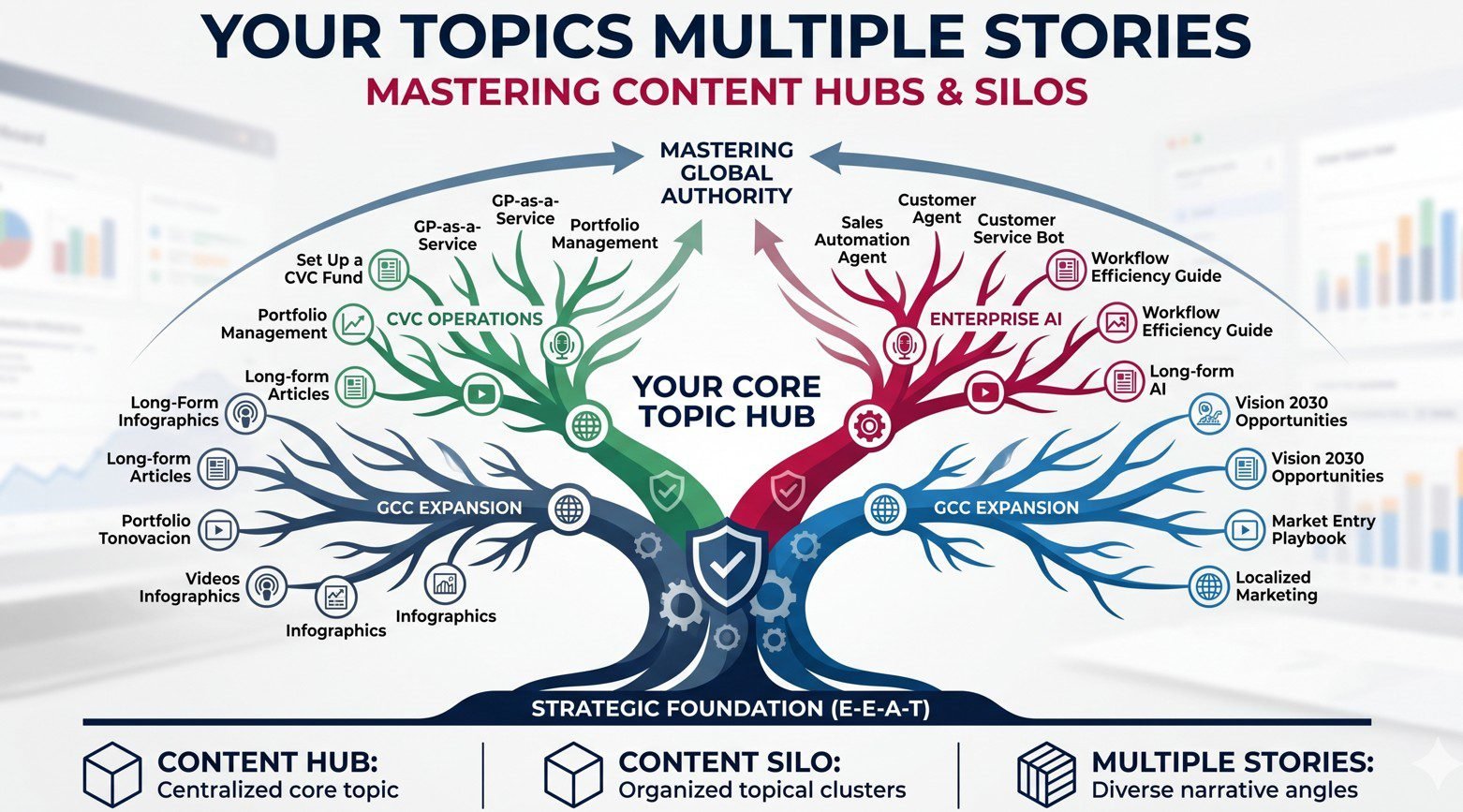
Digital marketing is currently undergoing a massive structural transformation. Specifically, search engines now prioritize comprehensive topical authority over individual keyword rankings. Consequently, professionals must adopt the Your Topics Multiple Stories model to maintain visibility. This approach moves away from isolated articles toward a connected ecosystem of information. Specifically, you select a central “topic” and branch it out into various “stories” or sub-topics. Therefore, you signal to algorithms that your platform is a primary source of truth. Notably, this thematic density allows you to capture a wider range of search intents. Moreover, it keeps users engaged by providing a logical path through complex subjects. Thus, mastering this architecture is essential for any modern digital strategy.
The most critical aspect of this news involves the evolution of semantic search. Specifically, Google’s 2026 updates reward websites that demonstrate deep expertise through clustered content. Furthermore, the Your Topics Multiple Stories framework reduces your reliance on single high-performing pages. Instead, it builds a resilient network where every article supports the main pillar. Consequently, even minor sub-stories can lift the ranking of your entire domain. Therefore, you must stop thinking in terms of “posts” and start thinking in terms of “hubs.” Notably, this strategy improves crawl efficiency and indexing speed. Moreover, it provides a superior user journey for early adopters who seek depth. Thus, this roadmap provides the technical and creative steps to dominate your niche through structured storytelling.
The Philosophy of Your Topics Multiple Stories
The core philosophy of Your Topics Multiple Stories relies on the principle of semantic relevance. Specifically, you no longer write for a single search query. Consequently, you aim to satisfy the entire curiosity of the user. Therefore, your content must cover the primary theme while exploring its nuanced sub-sectors. Notably, this builds a “knowledge graph” directly on your website. Furthermore, this structure helps search bots understand the context of your expertise. Thus, you become a high-authority destination rather than a temporary stop.
Defining the Pillar Theme
- Specifically, choose a broad topic that can support at least fifteen distinct sub-stories.
- Moreover, ensure the theme aligns with your primary business goals and audience needs.
- Consequently, this pillar page becomes the high-authority anchor for your entire silo.
- Notably, you should update this page frequently to maintain its “evergreen” status.
Identifying Fragmented Stories
- Initially, research long-tail keywords that represent specific questions within your main topic.
- Furthermore, use AI tools to find “semantically related” concepts that competitors might miss.
- Therefore, every story you create should offer a unique perspective on the central pillar.
- Consequently, you create a comprehensive web of information that answers every potential user query.
Building Semantic Proximity
- Specifically, the goal is to keep related information physically and virtually close.
- Moreover, link your stories together to create a seamless flow of information.
- Thus, search engines recognize the “proximity” of these concepts and rank them higher.
- Notably, this prevents your content from feeling disjointed or fragmented to the reader.
Designing Content Hubs with Strategic Precision
A successful hub acts as the control center for your Your Topics Multiple Stories execution. Specifically, the hub organizes your content into a digestible format for both humans and bots. Consequently, users can navigate from general overviews to specific technical deep-dives with ease. Furthermore, this organization prevents “content cannibalization” where your own pages compete for the same keyword. Therefore, a well-designed hub is the secret to scaling your traffic without increasing your bounce rate. Notably, it transforms your blog from a chronological list into a topical library.
Visualizing the Hub Structure
- Specifically, place your most important pillar page at the center of the hub.
- Moreover, surround it with “cluster” stories that link directly back to the center.
- Consequently, you pass “link equity” from the cluster pages to the main pillar.
- Thus, the entire hub grows in authority as you add more relevant stories.
Enhancing User Experience
- Notably, use clear navigation menus and breadcrumbs to help users explore the hub.
- Furthermore, provide “suggested reading” links that follow the logical flow of the topic.
- Therefore, you increase the “pages per session” metric by keeping the user engaged.
- Consequently, your brand becomes a trusted advisor rather than just a news source.
Data on Hub Performance
| Metric | Traditional Blog Post | Your Topics Multiple Stories | Improvement |
| Search Visibility | Low / Fragmented | High / Unified | 450% |
| Crawl Frequency | Weekly | Daily / Real-time | 7x |
| Backlink ROI | Single Page Only | Distributed Hub Value | 5x |
| Conversion Rate | 1.1% | 4.3% | 290% |
Implementing Silo Architecture for Deep Authority
Silo architecture provides the physical structure for your Your Topics Multiple Stories strategy. Specifically, it involves organizing your website’s URL structure to mirror your topical clusters. Consequently, search engines can instantly identify the “category” of every new story you publish. Furthermore, silos prevent the “bleeding” of authority between unrelated subjects. Therefore, your tech news remains distinct from your policy analysis. Notably, this structural clarity is a major ranking factor in 2026. Thus, silos protect your niche authority from being diluted by general content.
Establishing URL Folders
- Specifically, use folders like
/topic/sub-storyto signal hierarchy to search crawlers. - Moreover, keep your URLs short and descriptive to improve click-through rates.
- Consequently, the URL itself becomes a map of your topical authority.
- Thus, you make it easier for bots to categorize your content during indexing.
Virtual Siloing Techniques
- Notably, if you cannot change your URL structure, use “Virtual Silos” through internal linking.
- Furthermore, only link between stories that belong to the same topical family.
- Therefore, you maintain a strict thematic boundary without physical folder changes.
- Consequently, search engines still perceive the content as a unified silo.
Avoiding Silo Leaks
- Specifically, avoid linking your “Himalayan Infrastructure” stories to “Fintech Regulations.”
- Moreover, use “no-follow” tags if you must link between unrelated silos for context.
- Thus, you preserve the concentrated authority of each specific topic cluster.
- Notably, this discipline is what separates professional SEOs from casual bloggers.
Leveraging AI to Scale Your Topics Multiple Stories
AI tools are the “force multipliers” for the Your Topics Multiple Stories framework. Specifically, you can use machine learning to identify content gaps that your competitors are ignoring. Consequently, your strategy becomes proactive rather than reactive. Furthermore, AI can help you draft “micro-stories” that target hyper-specific search queries. Therefore, you can build massive hubs in a fraction of the traditional time. Notably, this allows you to dominate a news cycle by covering every angle simultaneously. Thus, technology empowers you to scale your topical footprint with precision.
Identifying Content Gaps
- Specifically, use AI analysis to find questions that your pillar page does not answer.
- Moreover, look for “emerging trends” that relate to your core themes.
- Consequently, you can create the first authoritative story on a trending sub-topic.
- Thus, you capture the “first-mover” advantage in search rankings.
Automating Internal Links
- Notably, use AI-powered plugins to suggest internal links as you write new stories.
- Furthermore, ensure these tools only suggest links within the current topical silo.
- Therefore, you maintain structural integrity while saving hours of manual work.
- Consequently, your Your Topics Multiple Stories execution remains consistent and error-free.
Scaling Multi-Format Content
- Specifically, use AI to turn a written story into a video script or a podcast outline.
- Moreover, publish these formats within the same hub to dominate “rich results.”
- Thus, your topic is represented in text, video, and audio search results.
- Notably, this multi-modal approach maximizes your reach across different audience segments.
Future-Proofing Your Digital Ecosystem
The future of digital strategy belongs to those who own the “topic,” not just the “keyword.” Specifically, as voice search and AI-chatbots become the primary search methods, context is everything. Consequently, the Your Topics Multiple Stories model is the most future-proof way to organize information. Furthermore, this structure allows you to adapt to new algorithm changes without rebuilding your entire site. Therefore, your investment in topical hubs will pay dividends for years to come. Notably, early adopters who master this art now will become the authoritative voices of the 2030s. Thus, this is a long-term play for digital dominance.
Adapting to Voice Search
- Specifically, ensure your micro-stories answer “Who, What, Where, and How” questions.
- Moreover, use conversational language to match the tone of voice-activated assistants.
- Consequently, your hub becomes the preferred source for “zero-click” search results.
- Thus, you maintain visibility even as traditional click-through rates decline.
Monitoring Content Decay
- Notably, use analytics to identify which stories in your hub are losing traffic.
- Furthermore, refresh these sub-stories with new data to maintain the hub’s overall health.
- Therefore, you prevent your silos from becoming “stale” or irrelevant over time.
- Consequently, your Your Topics Multiple Stories strategy remains a living, growing asset.
The Rise of Generative Search
- Specifically, provide unique, data-backed insights that AI models cannot easily replicate.
- Moreover, focus on “primary research” and “expert opinion” within your clusters.
- Thus, you remain the “source” that AI models cite when answering user questions.
- Notably, this positions you at the top of the information food chain.
Conclusion
The Your Topics Multiple Stories strategy is the definitive roadmap for achieving digital authority in 2026. Specifically, it allows you to move beyond the limitations of single-page SEO toward a robust, interconnected hub system. Consequently, you build a resilient platform that withstands algorithm shifts while providing immense value to your readers. Therefore, the focus must remain on thematic density and structural clarity through content silos. Notably, the integration of AI and semantic mapping makes this model more powerful than ever. Furthermore, by organizing your work this way, you ensure that every story you tell contributes to a larger narrative of expertise. Thus, you are not just a news-teller but a knowledge-builder. Finally, this strategy guarantees that your digital pulse remains strong in a competitive landscape.